
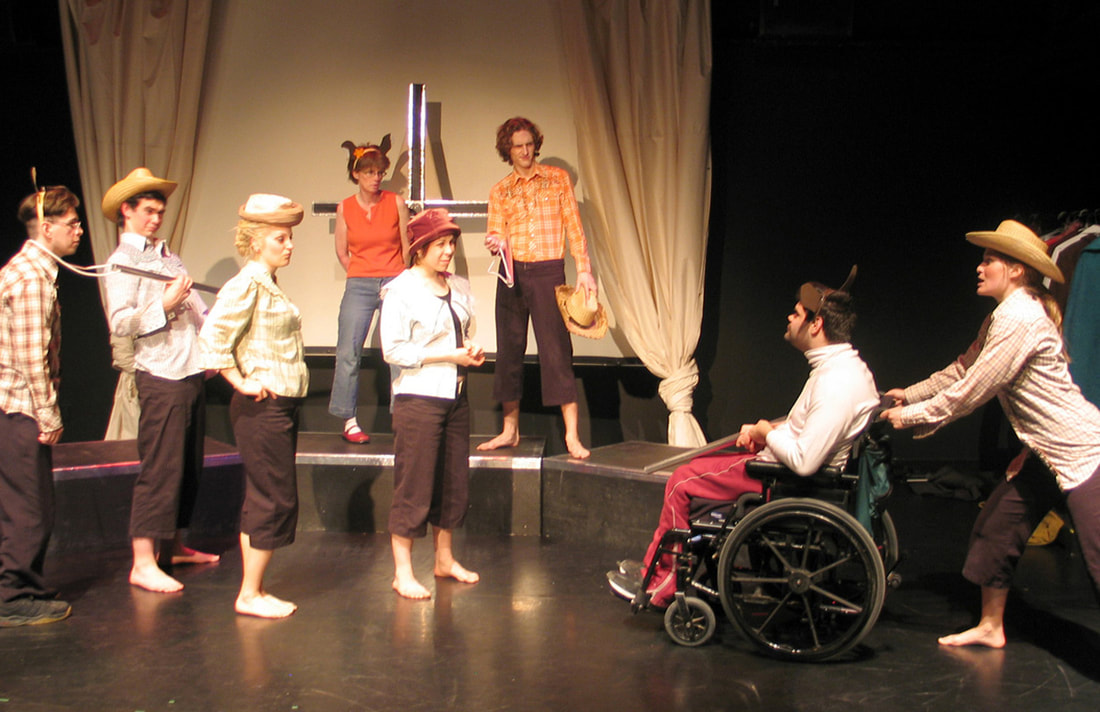
NOTWITHSTANDING: 100 Years of Eugenics In Alberta, Stage Left's contribution to Alberta's Centennial celebration; Big Secret Theatre, Calgary (2005)
|
WELCOME > ABOUT DDMAAC
|
VISION: Through DDMAAC, Stage Left cultivates grassroots conduits of cultural affinity, artistic autonomy and disability justice in Canada's Deaf/ Disability/ Mad Arts domain, and promotes the collective interests of artists whose lived experience of disablement advances artistic and aesthetic non-normativity.
DDMAAC'S PURPOSE1. Serve as an agent of solidarity, collective impact and disability equity, throughout the DDMSTC* Arts domain.
2. Provide access to a diversified hub of bottom-up (earned vs learned) DDMSTC Arts knowledge, resource, services and advocacy opportunities. 3. Affirm established Deaf/ Disabled/ Mad artists as fully qualified cultural contributors to the professional arts sector. 4. Advocate for increased investment in, and sector resources for, the production of non-normative aesthetics throughout the DDMSTC Arts domain. 5. Claim spaces of artistic autonomy and cultural authority for artists and art works that advance disability justice and non-normativity in the broader sector. 6. Advance disability justice (decolonization, anti-racism, anti-oppression and non-normalization) within the domain and throughout the broader arts ecology. |
DDMAAC'S PRIORITIES1. Position DDMSTC* Arts as an artistic practice, not an identity (i.e. put art back into the cultural representation).
2. Position access as merely the condition for DDMSTC Arts, not the goal (i.e. disrupt tokenistic cultural inclusion). 3. Replace access with the legal Duty to Accommodate, and align the sector with the CCA's ETA II policy (of Disability Equity). 4. Disrupt the Charitable Model of Disability that is once again on the rise; it is the opposite of DDMSTC Arts. 5. Disrupt the elevation of emerging artists and investment in non-artists (i.e. equalize inclusion). 6. Engage in cross-cultural solidarity with, and get behind the systemic advocacy of, other equity-seeking arts networks (i.e. get behind others rather than only centering ourselves). 7. Increase the use of accommodating production and presenting models in market access and artistic touring. |
*DDMSTC Arts: D/deaf/ hard of hearing; Disabled/ person with a disability; Sick/ spoonie/ survivor; Traumatized; Colonized....
